Home
What's
New?
com.oreilly.servlet
Servlet
Polls
Mailing
Lists
Servlet
Engines
Servlet
ISPs
Servlet
Tools
Documentation
Online
Articles
The
Soapbox
"Java
Servlet
Programming,
Second Edition"
"Java
Enterprise
Best Practices"
Speaking
& Slides
About
Jason
XQuery
Affiliate

|
Table
of Contents for Java Servlet Programming, 2nd Edition
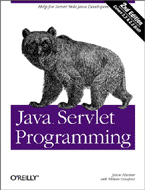
TABLE OF CONTENTS
- Preface
- Chapter 1: Introduction
- History of Web Applications
- Support for Servlets
- The Power of Servlets
- Chapter 2: HTTP Servlet Basics
- HTTP Basics
- The Servlet API
- Page Generation
- Web Applications
- Moving On
- Chapter 3: The Servlet Lifecycle
- The Servlet Alternative
- Servlet Reloading
- Init and Destroy
- Single-Thread Model
- Background Processing
- Load on Startup
- Client-Side Caching
- Server-Side Caching
- Chapter 4: Retrieving Information
- The Servlet
- The Server
- The Client
- Chapter 5: Sending HTML Information
- The Structure of a Response
- Sending a Normal Response
- Response Buffering
- Status Codes
- HTTP Headers
- When Things Go Wrong
- Six Ways to Skin a Servlet Cat
- Chapter 6: Sending Multimedia Content
- WAP and WML
- Images
- Compressed Content
- Server Push
- Chapter 7: Session Tracking
- User Authorization
- Hidden Form Fields
- URL Rewriting
- Persistent Cookies
- The Session Tracking API
- Chapter 8: Security
- HTTP Authentication
- Form-Based Authentication
- Custom Authentication
- Digital Certificates
- Secure Sockets Layer (SSL)
- Chapter 9: Database Connectivity
- Relational Databases
- The JDBC API
- Reusing Database Objects
- Transactions
- A Guestbook Servlet
- Advanced JDBC Techniques
- Beyond the Core
- Chapter 10: Applet-Servlet Communication
- Communication Options
- Daytime Server
- Chat Server
- Chapter 11: Servlet Collaboration
- Sharing Information
- Sharing Control
|
|
- Chapter 12: Enterprise Servlets and J2EE
- Distributing Load
- Integrating with J2EE
- Chapter 13: Internationalization
- Western European Languages
- Conforming to Local Customs
- Non-Western European Languages
- Multiple Languages
- Dynamic Language Negotiation
- HTML Forms
- Chapter 14: The Tea Framework
- The Tea Language
- Getting Started
- Request Information
- Tea Administration
- Tea Applications
- A Tool Application
- Final Words
- Chapter 15: WebMacro
- The WebMacro Framework
- Installing WebMacro
- WebMacro Directives
- WebMacro Templates
- A Tool Application
- Filters
- Chapter 16: Elements Construction Set
- Page Components as Objects
- Displaying a Result Set
- Chapter 17: XMLC
- A Simple XML Compile
- The Manipulation Class
- A Tool Application
- Chapter 18: JavaServer Pages
- Using JavaServer Pages
- Behind the Scenes
- Expressions and Declarations
- Directives
- JSP and JavaBeans
- Includes and Forwards
- A Tool Application
- Custom Tag Libraries
- Chapter 19: Odds and Ends
- Parsing Parameters
- Sending Email
- Using Regular Expressions
- Executing Programs
- Using Native Methods
- Acting as an RMI Client
- Debugging
- Performance Tuning
- Chapter 20: What's New in the Servlet 2.3 API
- Changes in the Servlet API 2.3
- Conclusion
- Appendix A: Servlet API Quick Reference
- Appendix B: HTTP Servlet API Quick Reference
- Appendix C: Deployment Descriptor DTD Reference
- Appendix D: HTTP Status Codes
- Appendix E: Character Entities
- Appendix F: Charsets
|
Copyright
© 1999-2005 Jason Hunter
| |
webmaster@servlets.com
Last updated:
March 1, 2009
|
|